
Did you know that, to be strictly accurate, a walnut is actually a fruit? Botanically speaking, a true nut is a hard shell containing the plant's fruit and seed, where the fruit does not open to release the seed into the world. Examples of botanical nuts include chestnuts, hazelnuts, and acorns. A 'drupe' is a type of fruit where a fleshy outer layer surrounds a hard shell (sometimes called a 'pit' or stone) containing a seed inside. Peaches, plums, and cherries are examples of drupes—but walnuts, almonds, and pecans are also drupes. They are simply drupes in which we eat the seed found inside the pit, rather than the fleshy fruit itself.
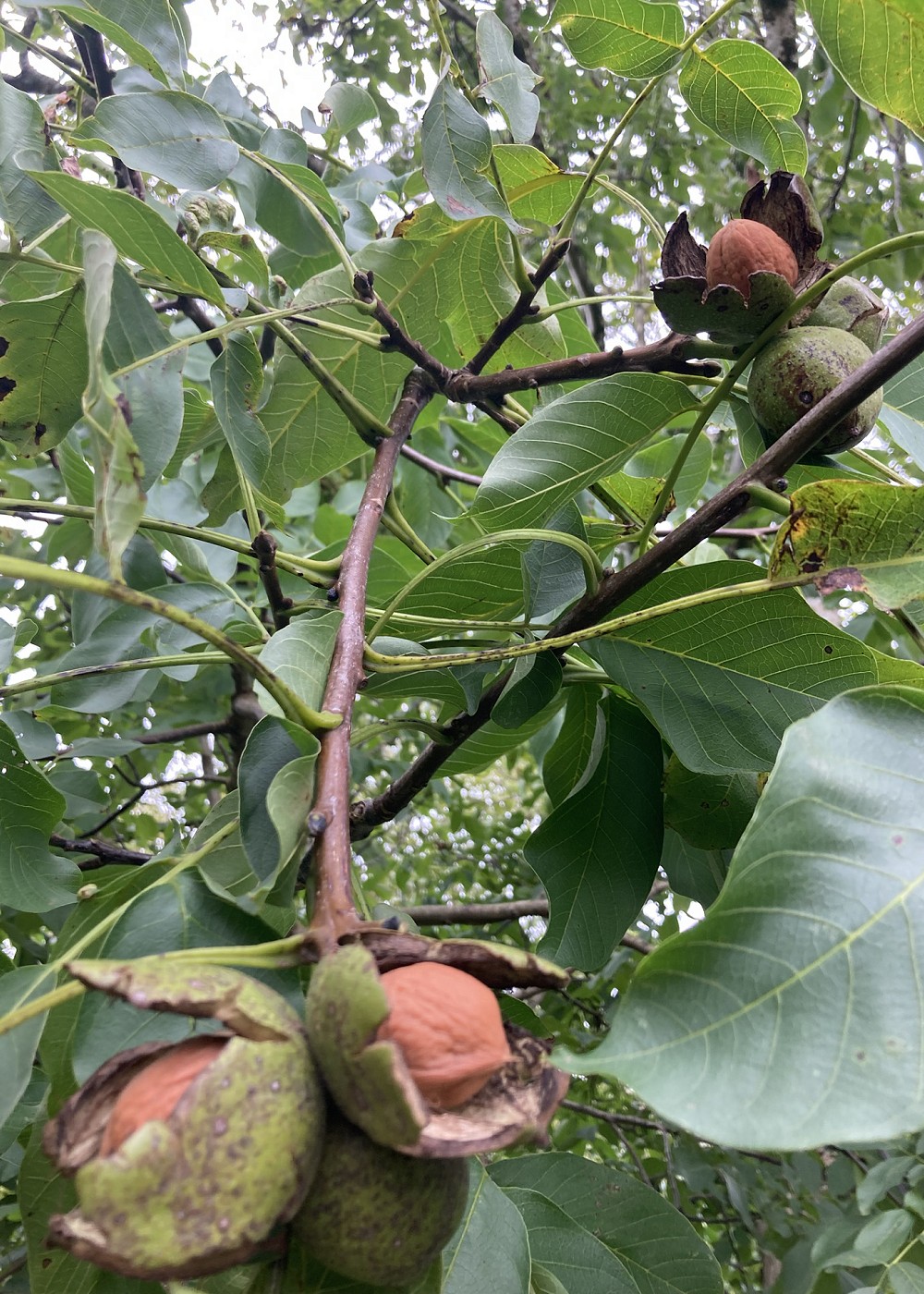
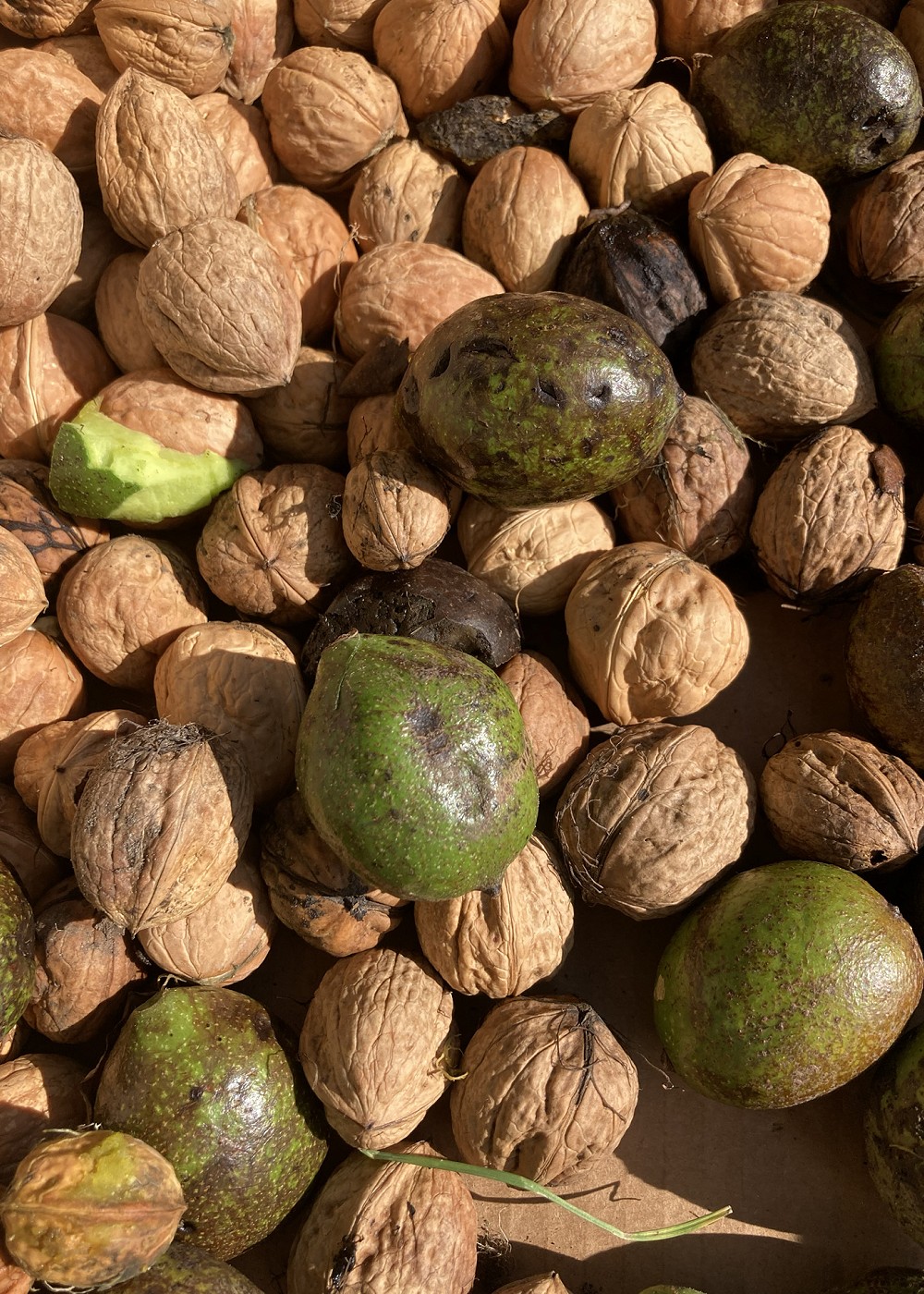
As Autumn arrives, our walnut tree—which my father planted about 20 years ago (alongside another that grew naturally from a fallen nut)—begins to reward us with its delicious harvest. Walnuts have fallen and lie scattered beneath the tree, waiting to be gathered. With a basket in our hands, we wander through the garden, gathering every nut from the ground; we visit every couple of days to collect more before the squirrels find them. I also go out to gather them after strong winds—when many will have fallen—and before the rain arrives.
Walnuts—fresh from the tree—are far tastier than those bought in shops (which are often imported) and are packed with goodness. With their distinctive shape and rich, earthy flavour, they make a wonderful addition to our daily diet. Whether eaten on their own, sprinkled over porridge, added to salads, or baked into cakes, walnuts offer a wealth of nutritional benefits.
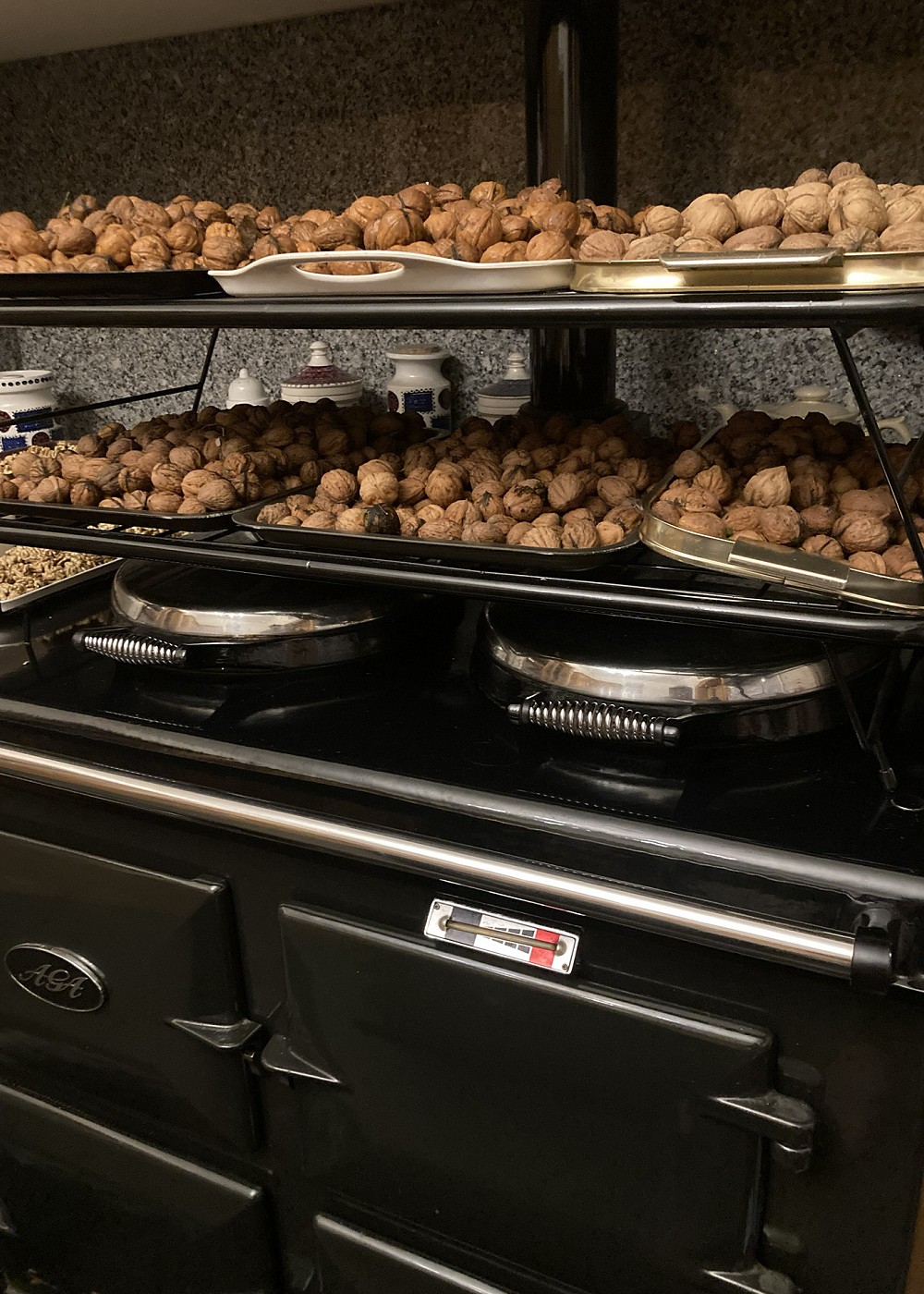
Once gathered, the nuts need to be dried. I usually leave the green husk on, unless it comes away easily. This can stain your hands, and since I find it difficult to handle them while wearing gloves, my hands end up quite stained with brown marks by the time I’m finished. It is essential to dry the nuts thoroughly, as any remaining moisture can encourage the growth of mould. I dry mine on racks above the Aga in the kitchen for about a week. Once dry, walnuts can be stored in their shells in a cool, dry place. I tend to crack the shells—which takes quite a bit of time—and then let the kernels dry for another 1 to 2 days to ensure there is no mould. I then keep them in an airtight container in a kitchen cupboard, which helps maintain their freshness.
Walnuts are healthy nuts, packed with essential nutrients such as omega-3 fatty acids—which help lower cholesterol—as well as antioxidants. They are also easy to incorporate into your diet, so we should eat more of them.
- Walnuts on the tree
Walnuts on the tree
- Collected Walnuts
Collected Walnuts
- Walnuts drying in the aga
Walnuts drying in the aga
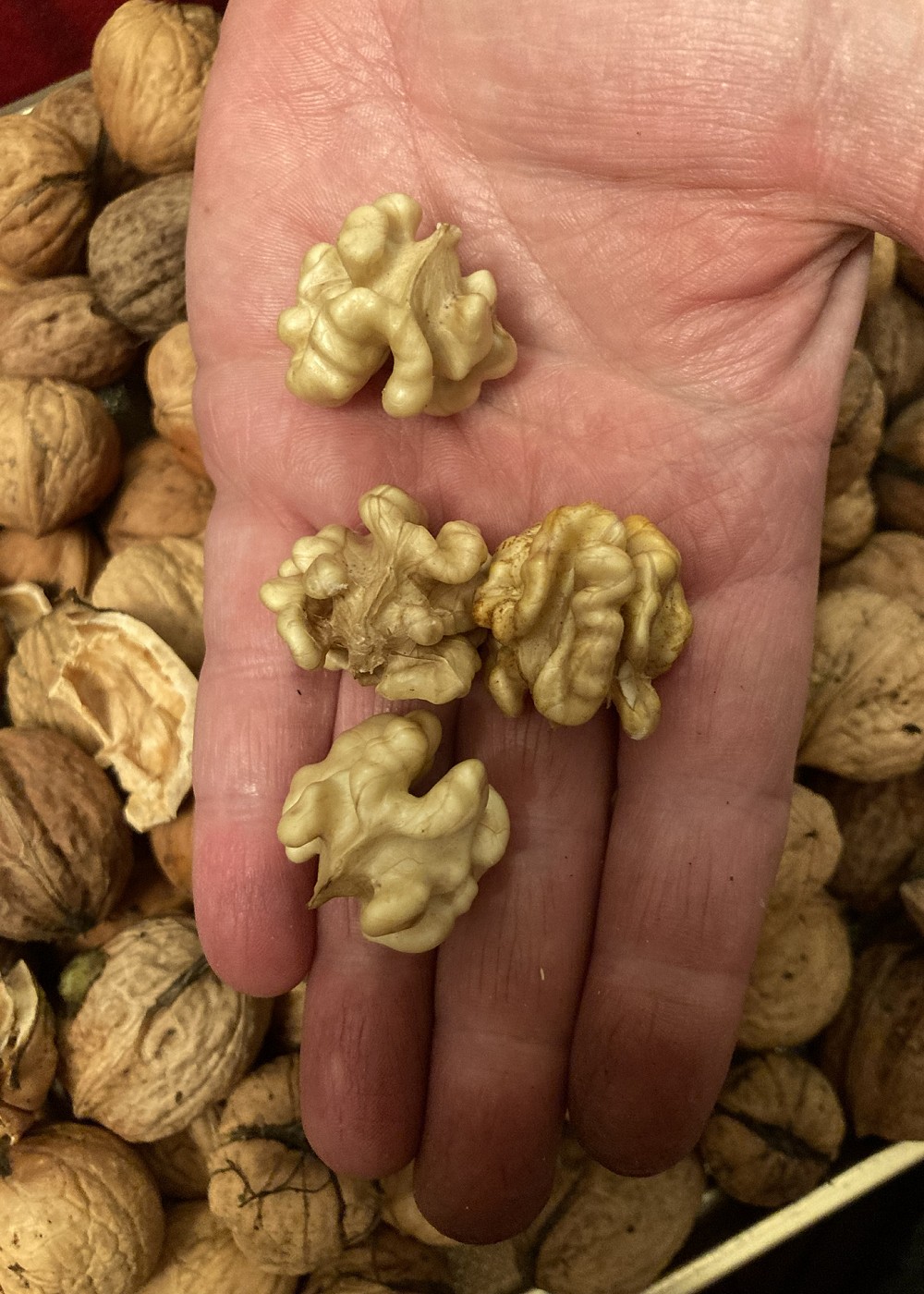
- walnuts in an open hand
Walnuts ready to eat