
There is something special about spending an autumn day in the fresh air of an apple orchard. The trees are laden with fruit, the air smells fresh, and every basket you fill feels like a small celebration of the harvest.
Picking apples is a great way to enjoy the outdoors and teach our children about nature and food at the same time.
We have three orchards: one at Taldraeth, planted in 2014 shortly after we moved to the site, and two from the nearby farm where I was raised.
My father was very fond of his apples and keen to keep the orchards on the farm, as his grandfather (my great-grandfather) used to graft apple trees. My grandfather on my mother's side also grew cider apples at their home in Llanfair Caereinion. The apples were sold to Bloomers and were taken to Welshpool railway sation and travelled on the train to Hereford.
Our orchards feature a cross-section of eating and cooking apples, the majority being Welsh varieties—such as Afal Enlli (Bardsey), Afal Deiamwnt (Dimond), Welsh Cox, Wern, Angelsey Pig's Snout and St Dogmeals —cultivated by the expert and unique character Ian Sturrock. Further information about these Welsh trees can be found on the website www.iansturrockandsons.co.uk. The red "Discovery" apple is a favourite among our children because it is pink inside. The pear varieties include Wyddfa (Snowdon) Queen and Penrhyn Castle pear.
I have now come to understand which apples keep best in our dedicated cellar drawers, so I carefully pick those straight from the tree for storage, keeping an eye on them until I have used them all up by around March.
Eating apples do not keep as well and need to be eaten or used immediately; these can be turned into tasty homemade apple juice. This is also an opportunity to use apples that have fallen to the ground or are bruised or damaged.
When selecting the apples, it is important to choose ones that are ripe and ready. A ripe apple should come off the tree easily with a gentle twist, rather than needing to be pulled off. You can also check if the birds have started pecking at them, which is a sign of ripeness.
After we had gathered the fruit, it was time to turn the harvest into juice—a tradition I started in 2025 that now involves the whole family. First, the apples need to be washed, removing and chopping off any damaged or rotting parts. Then, the apples must be crushed before being transferred to the press to extract the juice. The golden apple juice begins to flow almost immediately—even before the press is fully loaded—with the children rushing to grab a cup and taste the first of the juice.
The fresher the apples, the more aromatic and naturally sweet the juice tends to be.
The juice can be filtered if you prefer a smoother drink, although leaving some of the natural pulp gives it a thicker, more rustic texture.
It is essential to bottle the juice immediately in thoroughly cleaned, sterilized bottles, leaving an inch of headspace at the top. The juice will keep well in the refrigerator for about 4 to 5 days. If you need to store it for longer, you can freeze it in a clean carton or pasteurize it. You can pasteurise the juice at home by boiling water in a large saucepan, placing a tea towel at the bottom, and carefully arranging the bottles inside—much like a *bain-marie* method (I can fit about 8–9 bottles in a pan at once on the Aga). You then need to bring the juice to a temperature of 70–73°C and maintain it at that level for 20 minutes. Keep an eye on the temperature to ensure it doesn't rise too high and cause the bottles to crack. As the juice simmers, it expands and rises to the top of the bottles; as it cools, it contracts back down. I usually top the bottles back up to the brim before storing them in the cellar. The juice can then be kept for up to two years.
Pears – the process for making pear juice follows exactly the same principles as making apple juice. It is delicious and very sweet. You can also combine the apple and pears which is usefull if you have only a few pears.
Our pears tend to be hard when we harvest them, so turning them into juice is a practical way for us to use them. Alternatively, we ripen them by placing the pears in an empty, dark drawer for 5–7 days or longer—the trick is remembering to check on them every other day.
With our cooking apples I make chutney, jellies, apple sause for the freezer, puddings such as baked apples, tarts, mincemeat pies, Christmas puddings, and stuffing.
There is certainly great satisfaction in drinking additive-free juice made from apples I have gathered myself. It is healthy, cost-free, tastes fresh and organic, and is full of fruity, autumnal flavours. From growing and harvesting to preparing and enjoying.. Cheers!
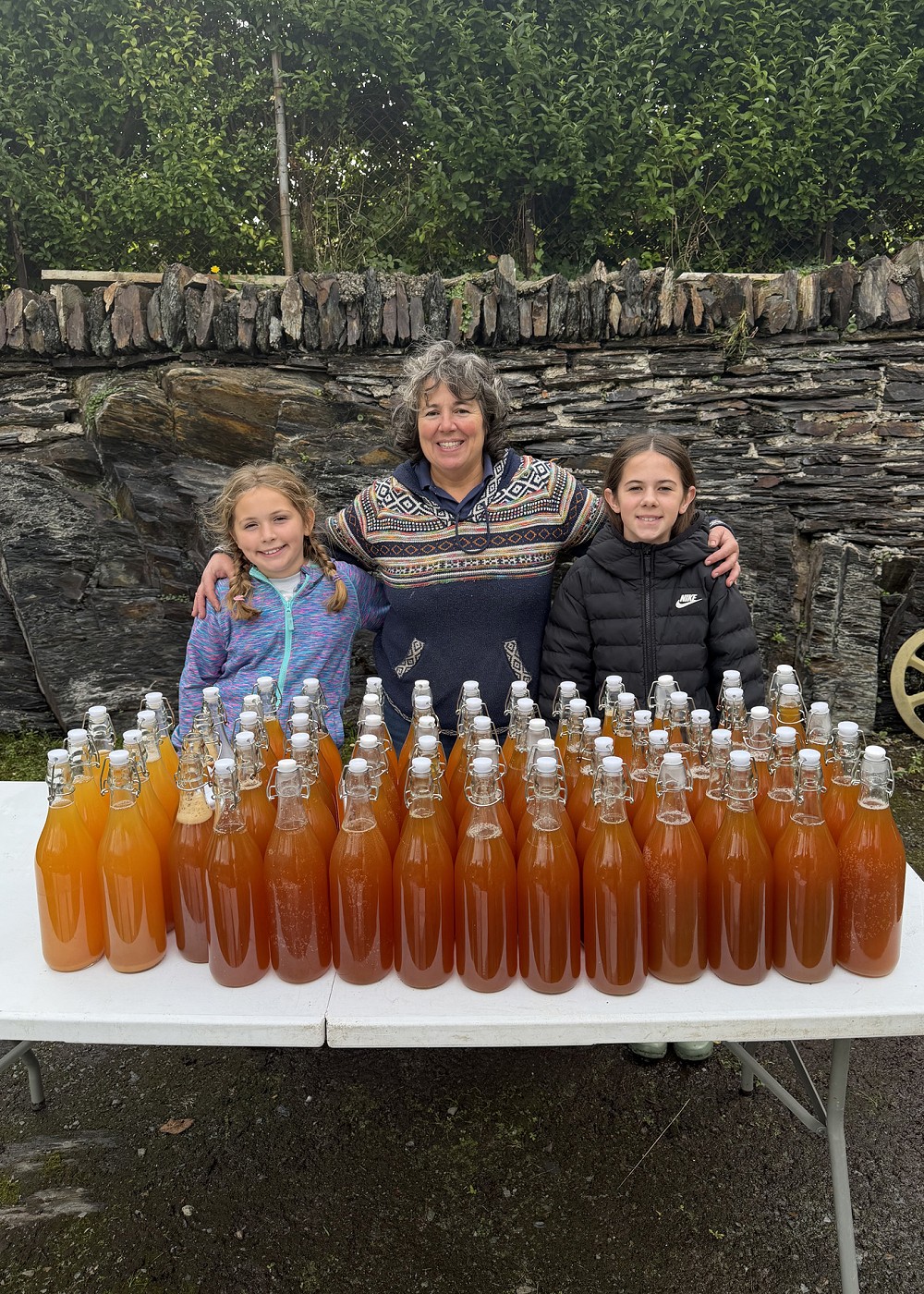
- Mirain and her girls with the bottled apple juice
Mirain and her girls with the bottled apple juice
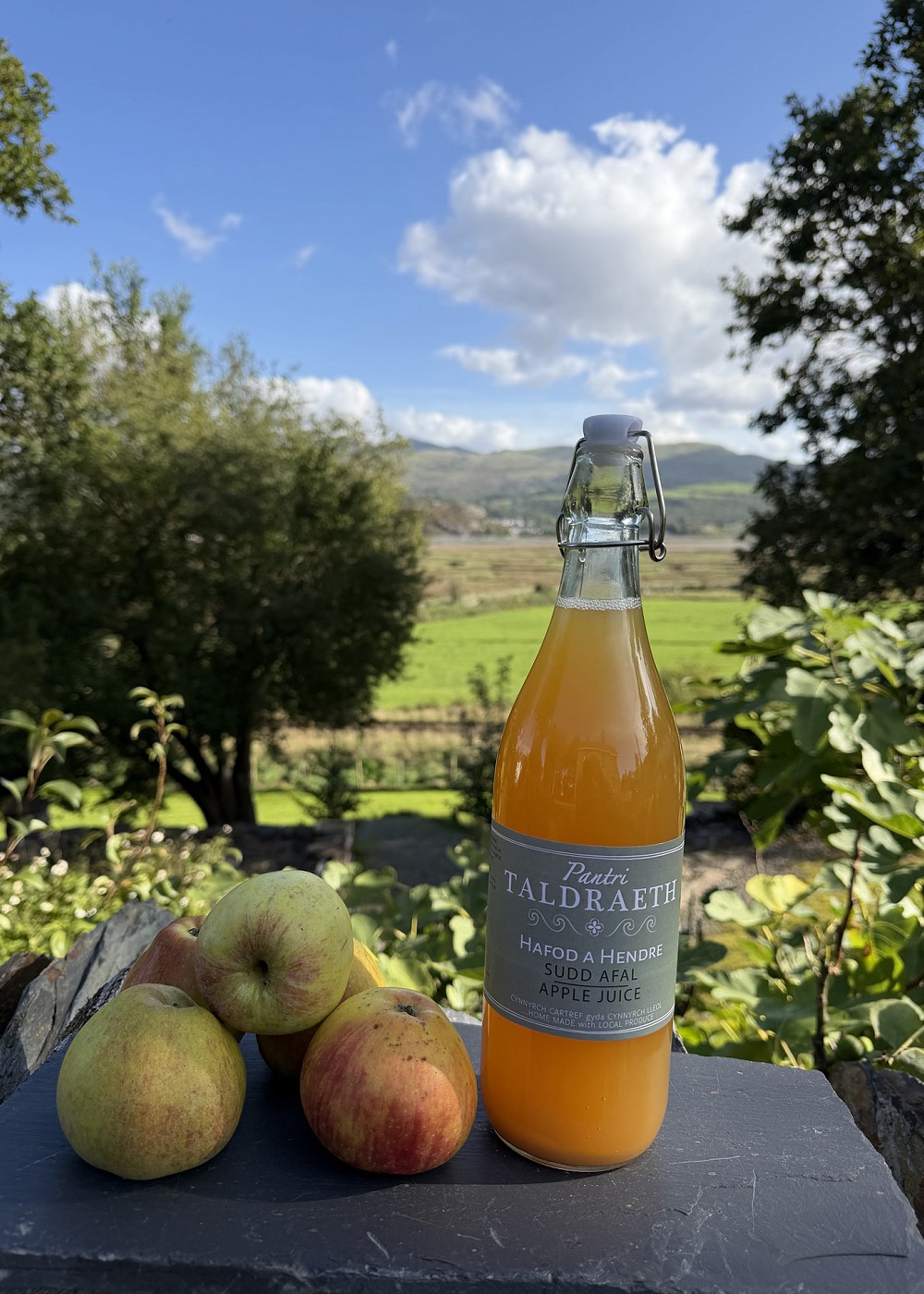
- Apple Juice
Apple Juice
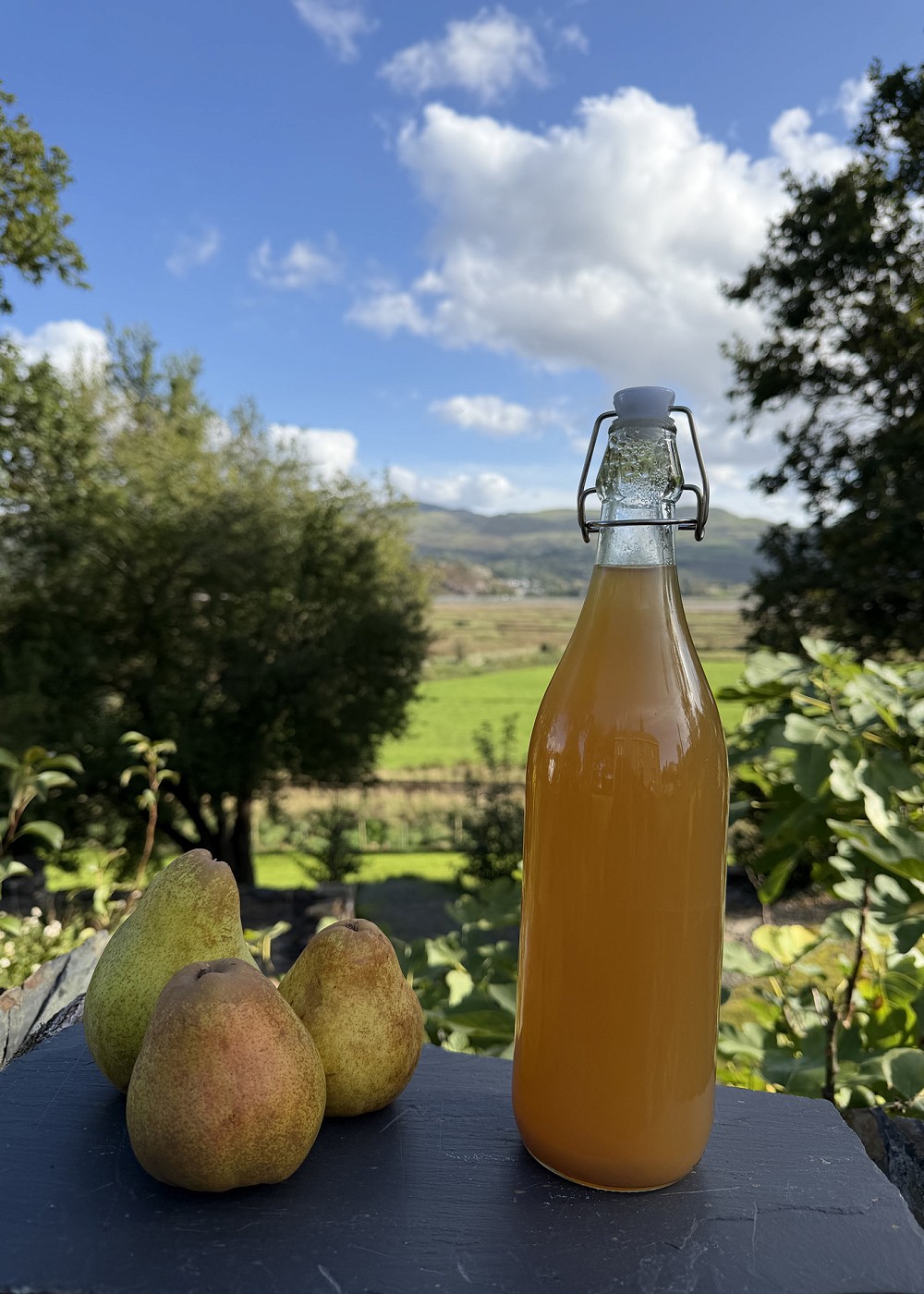
- Pear Juice
Pear Juice